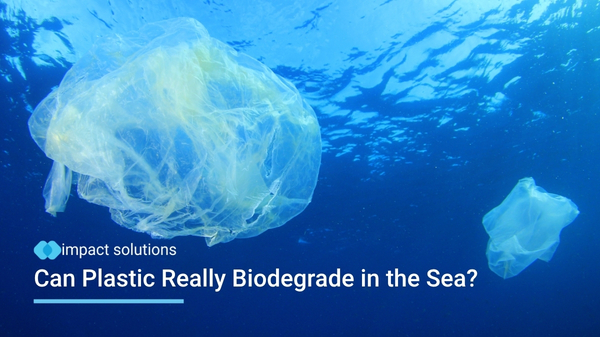
Plastic pollution has become one of the world’s most pressing environmental challenges. With millions of tonnes of plastic entering marine environments every year, the demand for more sustainable materials has never been greater. Manufacturers are responding by developing plastics designed to biodegrade, but this raises an important question:
Can plastic really biodegrade in the sea?
The answer is more complex than a simple yes or no. Not all plastics behave the same way, and biodegradation depends on factors such as the material itself, environmental conditions and the microorganisms present. That’s why environmental claims need to be backed by robust scientific evidence rather than marketing language alone.
This is where ISO 23977, Determination of the aerobic biodegradation of plastic materials exposed to seawater, plays an important role. The international standard provides a recognised laboratory method for assessing how plastic materials biodegrade under controlled seawater conditions, helping manufacturers generate reliable, repeatable data to support product development and environmental claims.
Why Does ISO 23977 Matter?
As governments tighten regulations on environmental marketing and consumers become more aware of greenwashing, businesses are under increasing pressure to substantiate claims about biodegradable products.
Simply describing a product as “marine biodegradable” is no longer enough. Organisations need credible scientific evidence to demonstrate how a material performs under defined conditions. ISO 23977 provides a consistent testing methodology that enables meaningful comparisons between materials and supports informed decision making throughout the product development process.
For businesses investing in sustainable innovation, testing to internationally recognised standards can also enhance credibility with customers, regulators and other stakeholders.
What Does ISO 23977 Measure?
ISO 23977 specifies a laboratory test method for determining the aerobic biodegradation of plastic materials exposed to seawater.
Under controlled conditions, plastic samples are exposed to seawater containing naturally occurring marine microorganisms in the presence of oxygen. As these microorganisms metabolise biodegradable material, the test measures the resulting biological activity to determine the extent of biodegradation over time.
The standard provides a repeatable method for comparing materials, supporting research and generating scientific data that can inform product development.
It is important to understand what ISO 23977 does not do. The standard does not certify that a plastic product will completely biodegrade if it enters the ocean, nor does it suggest that biodegradable plastics are a solution to marine litter. Instead, it provides a controlled laboratory framework for evaluating biodegradation under specific test conditions.
Supporting Innovation Without Greenwashing
Innovation in sustainable plastics is advancing rapidly, but environmental claims must keep pace with scientific evidence.
Testing in accordance with ISO 23977 allows organisations to:
- Compare the biodegradation performance of different plastic formulations.
- Generate reliable scientific data during product development.
- Support environmental and sustainability claims with recognised testing methods.
- Improve transparency and build trust with customers and regulators.
- Demonstrate a commitment to responsible product innovation.
By using internationally recognised standards, organisations can communicate product performance with greater confidence while reducing the risk of misleading or unsubstantiated claims.
Who Should Consider ISO 23977?
ISO 23977 is particularly valuable for organisations involved in the design, manufacture or evaluation of plastic materials intended for marine or coastal applications, or where environmental performance is a key consideration.
This includes:
- Plastic and polymer manufacturers
- Packaging producers
- Research and development organisations
- Environmental testing laboratories
- Universities and research institutions
- Organisations developing biodegradable materials
- Businesses seeking to validate sustainability claims
As environmental expectations continue to evolve, demonstrating that products have been assessed using internationally recognised standards can provide a valuable competitive advantage.
ISO 23977 as Part of a Wider Sustainability Strategy
While biodegradable materials have an important role to play, they are only one part of the solution to reducing marine plastic pollution. Effective waste management, responsible product design, improved recycling infrastructure and evidence-based environmental decision making remain equally important.
ISO 23977 supports these wider sustainability objectives by providing organisations with a reliable method for understanding how materials behave under controlled marine conditions. This scientific approach enables better product design, more informed material selection and greater transparency when communicating environmental performance.
Rather than relying on assumptions, businesses can use the data generated through ISO 23977 to support continuous improvement and demonstrate a genuine commitment to sustainability.
How Impact Solutions Can Help
Understanding and applying environmental standards can be challenging, particularly as regulations and customer expectations continue to evolve. At Impact Solutions, we help organisations interpret ISO standards and understand how they fit within broader quality, environmental and sustainability strategies.
Whether you are developing innovative plastic materials, reviewing environmental claims or identifying the most appropriate testing standards for your products, our experienced consultants provide practical guidance tailored to your business.
From understanding standard requirements to supporting implementation and continual improvement, we help organisations build confidence in their products while strengthening compliance and environmental credibility.
Looking Ahead
As demand for sustainable plastics continues to grow, organisations will need more than good intentions to demonstrate environmental responsibility. They will need credible, scientifically supported evidence that stands up to increasing regulatory and market scrutiny.
ISO 23977 provides a recognised framework for evaluating the aerobic biodegradation of plastic materials exposed to seawater, helping businesses make informed decisions and support transparent environmental claims.
If your organisation would like to understand how ISO 23977 or other environmental standards could support your sustainability objectives, Impact Solutions is here to help. Contact our team today to discuss how we can support your journey towards responsible innovation and internationally recognised best practice.
FAQ
What is marine biodegradation testing?
Marine biodegradation testing assesses how plastic materials biodegrade when exposed to seawater under controlled laboratory conditions. It helps manufacturers and researchers understand how materials interact with marine microorganisms and provides scientific data to support product development and environmental claims.
Does ISO 23977 prove that a plastic product will biodegrade in the ocean?
No. ISO 23977 does not guarantee that a product will biodegrade in real-world marine environments. Instead, it specifies a standardised laboratory method for determining the aerobic biodegradation of plastic materials exposed to seawater. The results provide a consistent basis for comparing materials under defined test conditions.
Why is marine biodegradation testing important?
As demand for sustainable plastics continues to grow, organisations need reliable evidence to support claims about environmental performance. Marine biodegradation testing helps manufacturers develop new materials, compare product performance and demonstrate a commitment to responsible innovation using internationally recognised testing methods such as ISO 23977.