When developing a product with biodegradability claims, choosing the correct testing standard is critical. Using the wrong biodegradation test can result in misleading data, failed certifications, regulatory risk, and costly reformulation.
Biodegradation is not a one-size-fits-all concept. The correct standard depends on where the product is expected to break down, how it will be disposed of, and what claims you intend to make.
In this guide, we explain how to select the right biodegradation testing pathway for your product.
Why Biodegradation Standards Matter
The term “biodegradable” is often used loosely in marketing, but scientifically it refers to a material being broken down by microorganisms into carbon dioxide (CO₂), water, biomass, and mineral salts.
Different environments, such ascompost, soil, freshwater, and marine, have vastly different microbial activity, oxygen levels, temperatures, and moisture conditions. Because of this, biodegradation must be tested under controlled conditions that simulate the intended environment.
Regulators, certification bodies, and retailers increasingly require evidence based on recognised standards such as ASTM, ISO, or EN methods. Without testing to the correct standard, environmental claims may not be defensible.
Step 1: Define the Intended End-of-Life Environment
The first question to ask is:
Where is this product realistically expected to end up?
Common end-of-life scenarios include:
- Industrial composting
- Home composting
- Soil (e.g. agriculture or horticulture applications)
- Marine environments
- Freshwater systems
- Landfill (although landfill biodegradation claims are often problematic)
Choosing the wrong environmental simulation is one of the most common mistakes in biodegradation testing.
For example, a material that passes industrial composting conditions at 58°C may not degrade effectively in ambient soil or marine conditions.
Step 2: Identify the Relevant Biodegradation Standard
Once the disposal pathway is clear, you can identify the correct standard.
Industrial Composting
For packaging and compostable plastics in Europe, EN 13432 is commonly required. It evaluates:
- Biodegradation rate
- Disintegration
- Ecotoxicity
- Heavy metal limits
In the US, ASTM D6400 serves a similar function.
Industrial composting standards typically operate at elevated temperatures (around 58°C) with controlled moisture and oxygen levels.
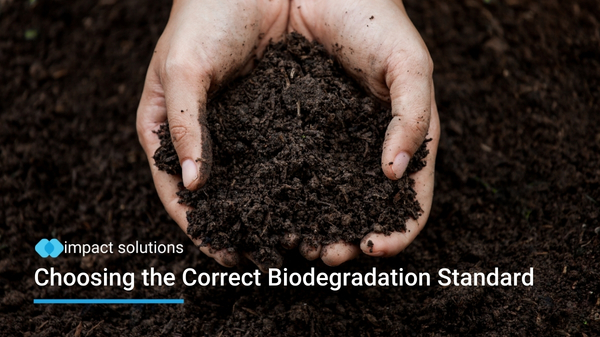
Soil Biodegradation
For agricultural mulch films and similar products, EN 17033 may be applicable. Soil biodegradation testing measures microbial breakdown under soil conditions and is particularly relevant for:
- Mulch films
- Tree guards
- Horticultural products
Soil testing is more variable than compost testing due to environmental complexity.
Marine Biodegradation
Marine biodegradability claims require careful consideration. ASTM D6691 is one recognised method for assessing aerobic biodegradation in marine environments.
However, marine conditions are significantly harsher and less microbially active than compost. Claims relating to marine biodegradability are often subject to regulatory scrutiny.
Freshwater Biodegradation
ISO 14851 and related standards assess aerobic biodegradation in aqueous environments.
These may be relevant for products likely to enter wastewater systems or freshwater bodies.
Step 3: Understand the Type of Claim You Want to Make
Your testing pathway should align with your marketing and compliance claims.
Ask:
- Are you claiming “industrial compostable”?
- “Soil biodegradable”?
- “Marine biodegradable”?
- Or simply “biodegradable”?
Generic claims are increasingly discouraged by regulators unless clearly defined and supported by specific testing conditions.
Clear, environment-specific claims supported by recognised standards are far more defensible.
Step 4: Consider Certification Requirements
If you intend to obtain third-party certification (e.g. TÜV, BPI, DIN CERTCO), you must follow the exact standards required by the certification body at an approved testing laboratory.
Pre-screening testing during R&D can significantly reduce the risk of certification failure later in development.
Selecting the correct test early saves both time and cost.
Step 5: Engage Technical Expertise Early
Biodegradation testing is influenced by:
- Polymer chemistry
- Additive formulation
- Product thickness
- Surface area
- Environmental conditions
A technically informed testing strategy ensures:
- Correct standard selection
- Proper sample preparation
- Valid interpretation of results
- Alignment with regulatory expectations
Waiting until after product launch to validate claims increases risk.
Common Mistakes to Avoid
- Testing under compost conditions when the product is intended for soil use
- Assuming “bio-based” means biodegradable
- Relying solely on supplier data
- Making marine claims without marine testing
- Using outdated standards
A structured testing approach avoids these pitfalls.
Final Thoughts
Choosing the correct biodegradation standard is not just a technical decision — it is a commercial and regulatory one.
The right testing pathway ensures:
- Credible sustainability claims
- Regulatory compliance
- Reduced greenwashing risk
- Stronger market confidence
- Smoother certification processes
Biodegradability is measurable science. Selecting the appropriate standard ensures that your product’s environmental performance is both accurate and defensible.
Ready to Validate Your Product?
At Impact Solutions, we support manufacturers across plastics, packaging, agriculture, automotive, chemicals and renewable energy sectors with expert biodegradation testing and guidance.
If you are developing a product with environmental claims, speak to our team today to ensure you choose the correct biodegradation standard from the outset.
Contact us to discuss your product and testing pathway.
Visit Impact-Bio® for more information on biodegradation testing standards.
Follow us on LinkedIn, Facebook and Instagram for more service updates and industry news.