500W Vertical Burning Test
For many electrical, electronic and industrial products, demonstrating resistance to fire is a critical part of product safety and compliance. Materials used in enclosures, connectors and other safety-critical components may be exposed to more severe ignition sources than those represented by standard 50W flammability tests.
Selecting a material that performs well under demanding fire conditions is essential to reduce the risk of product failure, certification delays, costly redesigns and safety concerns. Manufacturers need reliable data to demonstrate that their materials can withstand higher heat inputs and continue to provide protection during a fire event.
The 500W Vertical Burning Test provides a more severe assessment of material flammability than conventional 50W testing, helping determine whether materials meet the requirements for the UL94 5VA or 5VB classifications.
What the 500W Vertical Burning Test Involves
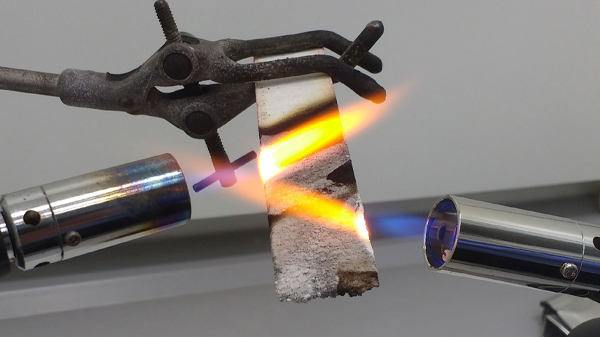
The 500W Vertical Burning Test evaluates the burning behaviour of rigid plastic materials when exposed to a 500W test flame under controlled laboratory conditions.
Testing is performed in accordance with:
- IEC 60695-11-20
- BS EN 60695-11-20
- ASTM D5048
The test is commonly used to determine whether a material satisfies the requirements for the following UL94 classifications:
- UL94 5VA – The highest level of performance under the 500W flame test. Materials must self-extinguish quickly, must not produce flaming drips and the plaque specimen must not develop a hole.
- UL94 5VB – Similar to 5VA but allows a hole to form in the plaque specimen while still meeting the required burning behaviour.
Unlike the 50W Vertical Burning Test, the 500W method also evaluates a material’s resistance to burn-through, making it particularly suitable for applications where enclosure integrity is critical.
The test measures:
- Afterflame time
- Afterglow time
- Flaming particles or drips
- Burn-through performance
- Hole formation in plaque specimens
- Overall fire performance under a high-energy flame
Methodology
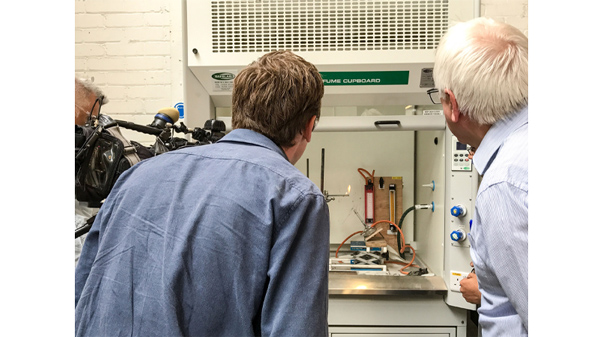
At Impact Solutions, 500W Vertical Burning Tests are performed using calibrated flammability testing equipment in accordance with recognised international standards.
A typical testing programme includes:
- Preparation of specimens to the required dimensions and thickness.
- Conditioning of samples under controlled temperature and humidity.
- Mounting of bar and plaque specimens within the test apparatus.
- Application of the 500W flame for the specified duration and number of flame applications.
- Measurement of afterflame and afterglow times.
- Observation of flaming drips and specimen behaviour.
- Assessment of plaque specimens for hole formation or burn-through.
- Evaluation against the requirements for UL94 5VA or 5VB classification.
- Comprehensive reporting with test observations and results.
Testing is carried out under tightly controlled laboratory conditions to ensure repeatable and reliable results.
Relevant Industry Applications
500W Vertical Burning Testing is widely used for:
- Electrical and electronic enclosures
- Switchgear and power distribution equipment
- Consumer appliances
- Automotive electrical systems
- Battery housings and energy storage systems
- Industrial control equipment
- High-performance engineering plastics
- Polymer compound development
Benefits of 500W Vertical Burning Testing
- Determines performance against UL94 5VA and 5VB classifications
- Evaluates material resistance to a severe ignition source
- Assesses both burning behaviour and burn-through resistance
- Supports product certification and regulatory compliance
- Assists with material selection during product development
- Enables comparison between different materials and formulations
- Reduces the risk of product failure and costly redesigns
Need to demonstrate the fire performance of your plastic materials under severe flame exposure?
Contact Impact Solutions to discuss 500W Vertical Burning Testing to IEC 60695-11-20, BS EN 60695-11-20 and ASTM D5048, and determine whether your materials achieve the required UL94 5VA or 5VB classification.
FAQ
Q: What is the difference between UL94 5VA and 5VB?
Both classifications use the same 500W flame test. The key difference is that materials achieving a 5VA classification must not develop a hole in the plaque specimen, whereas 5VB materials may develop a hole while still meeting the required burning performance.
Q: How is the 500W Vertical Burning Test different from the 50W Vertical Burning Test?
The 500W test uses a much more severe flame and includes an assessment of burn-through resistance. It is intended for applications requiring a higher level of fire performance than the UL94 V-0, V-1 or V-2 classifications.
Q: Why are plaque specimens tested as well as bar specimens? Plaque specimens are used to evaluate whether the flame penetrates the material. This burn-through assessment is an important part of determining whether a material meets the requirements for UL94 5VA or 5VB.