50W Horizontal Burning Test
Understanding how a material behaves when exposed to a small ignition source is a fundamental part of product safety. For manufacturers of plastic components, poor flammability performance can lead to failed product approvals, delayed market entry, safety concerns, and costly redesigns.
Many industries require materials to demonstrate a minimum level of fire performance before they can be used in electrical equipment, consumer products, automotive components, or industrial applications. Reliable flammability testing helps you identify suitable materials early in development and demonstrate compliance with customer or regulatory requirements.
The 50W Horizontal Burning Test provides a simple, repeatable method for assessing the burning behaviour of plastic materials when exposed to a controlled flame, supporting product development, quality assurance, and material selection.
What the 50W Horizontal Burning Test Involves
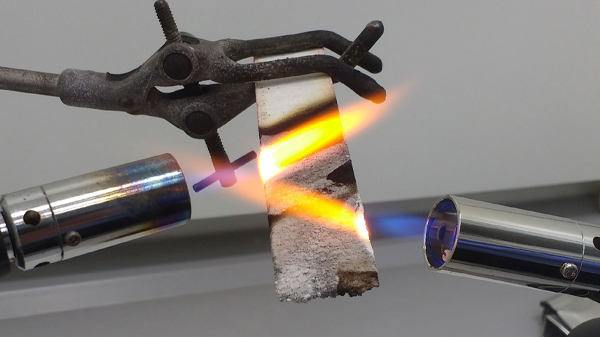
The 50W Horizontal Burning Test evaluates the horizontal burning characteristics of plastic and other non-metallic materials when exposed to a small 50W test flame. The method is specified in:
- IEC 60695-11-10
- BS EN 60695-11-10
- ASTM D635
The test is also commonly used to determine whether a material meets the UL94 HB (Horizontal Burn) classification. An HB rating demonstrates that a material burns at a controlled rate or self-extinguishes before the flame reaches the specified reference mark, making it the least stringent classification within the UL94 flammability standard.
The test determines:
- Linear burning rate
- Whether the material self-extinguishes
- Time taken for the flame to travel a specified distance
- Extent of material damage after ignition
Results help manufacturers compare materials and determine their suitability for applications where fire performance is important. The IEC method is intended as a small-scale screening test for comparing the burning behaviour of materials used in electrotechnical products.
Methodology
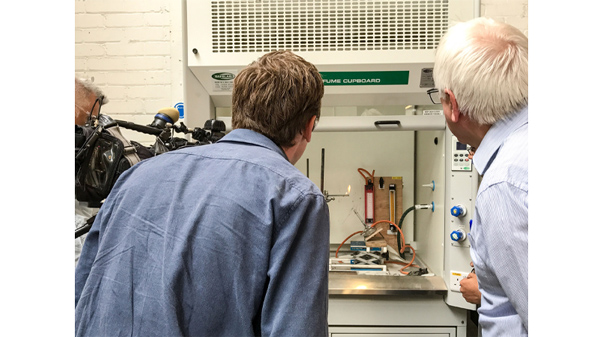
At Impact Solutions, horizontal burning testing is carried out using calibrated flammability equipment in accordance with recognised international standards.
A typical testing programme includes:
- Preparation of specimens to the required dimensions and thickness.
- Conditioning of samples under controlled temperature and humidity where required.
- Horizontal mounting of the specimen in the test apparatus.
- Application of a 50W test flame for the specified duration.
- Measurement of burning time and flame travel distance.
- Calculation of the linear burning rate where applicable.
- Assessment of self-extinguishing behaviour and specimen damage.
- Comprehensive reporting with results and observations.
Testing is performed under carefully controlled laboratory conditions to ensure repeatable and comparable results.
Relevant Industry Applications
The 50W Horizontal Burning Test is widely used for:
- Electrical and electronic components
- Consumer products
- Automotive plastic components
- Building products
- Appliance housings
- Plastic compounds and polymer development
Benefits of 50W Horizontal Burning Testing
- Supports UL94 HB classification for plastic materials
- Evaluates the flammability performance of plastic materials
- Supports product development and material selection
- Helps demonstrate compliance with recognised fire testing standards
- Enables comparison between different materials and formulations
- Supports quality control and product qualification
- Reduces the risk of fire-related product failures
Need to assess the flammability performance of your materials?
Contact Impact Solutions to discuss 50W Horizontal Burning Testing to IEC 60695-11-10, BS EN 60695-11-10 or ASTM D635 and ensure your products meet the required fire performance standards.
FAQ
Q: What is the purpose of the 50W Horizontal Burning Test?
The test measures how quickly a material burns when exposed to a small ignition source in a horizontal position, allowing comparison of flammability performance.
Q: What is the difference between IEC 60695-11-10 and ASTM D635?
Both standards assess horizontal burning behaviour using similar principles, although specimen dimensions, reporting requirements, and acceptance criteria may differ depending on the application.
Q: Does this test provide a UL94 HB classification?
Yes. The horizontal burning method is used to determine whether a material meets the requirements for a UL94 HB classification. Many manufacturers use this testing during material selection, product development, and compliance programmes where an HB rating is specified.