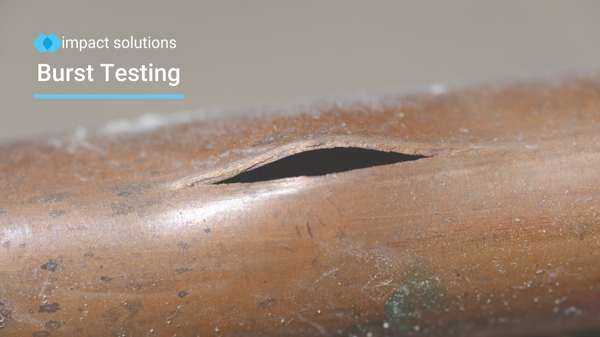
Scanning Electron Microscopy
When standard inspection methods are not enough, critical material issues can remain hidden at the microscopic level. Surface defects, contamination, coating failures, and fracture mechanisms often require high resolution analysis to be properly understood.
Without this level of detail, investigations can stall, leading to unresolved failures, inconsistent quality, and increased development costs.
Scanning Electron Microscopy (SEM) provides detailed, high magnification imaging of material surfaces, helping you identify root causes, validate materials, and make confident decisions.
What SEM Analysis Involves
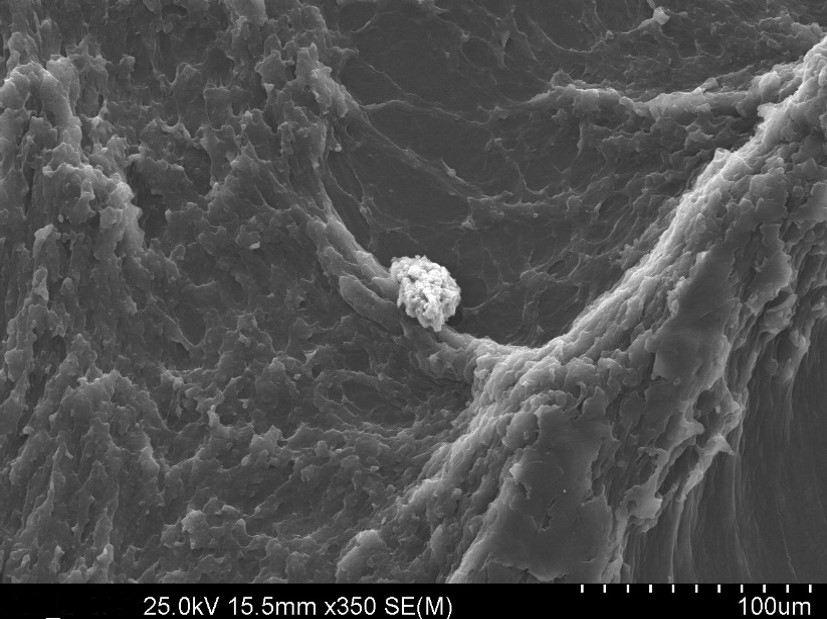
Scanning Electron Microscopy is an advanced imaging technique that uses a focused beam of electrons to scan the surface of a material, producing highly detailed images at magnifications far beyond optical microscopy.
SEM enables analysis of:
- Surface morphology and topography
- Microstructural features
- Fracture surfaces and failure modes
- Coatings and interfaces
- Contamination and inclusions
When combined with energy-dispersive X-ray spectroscopy (EDS), SEM can also provide elemental composition data, allowing identification of unknown materials or contaminants.
Methodology
At Impact Solutions, SEM analysis is performed using advanced instrumentation to deliver high resolution imaging and material insights.
A typical SEM programme includes:
- Sample preparation, which may include cutting, mounting, or coating with a conductive layer.
- Placement of the sample in a vacuum chamber.
- Scanning with a focused electron beam across the sample surface.
- Detection of emitted electrons to generate high resolution images.
- Optional EDS analysis for elemental composition.
- Capture of detailed micrographs for analysis and reporting.
- Expert interpretation to support investigations or development work.
Magnification can range from tens to hundreds of thousands of times, enabling detailed analysis of micro and nanoscale features.
Relevant Industry Applications
SEM is widely used for:
- Plastics and polymer analysis
- Failure analysis and root cause investigation
- Coatings and surface engineering
- Electronics and semiconductor components
- Composites and fibre analysis
- Contamination and defect identification
Benefits of SEM Analysis
- Provides extremely high resolution imaging
- Reveals microstructural and surface details not visible with optical methods
- Supports detailed failure analysis and root cause identification
- Enables elemental analysis when combined with EDS
- Delivers clear visual evidence for reporting and decision making
- Complements other analytical techniques
Need deeper insight into your material or failure mechanism?
Contact Impact Solutions to discuss SEM analysis and gain high resolution data to support your investigation or development work.
FAQ
Q: What is the difference between SEM and optical microscopy?
SEM uses electrons instead of light, allowing much higher magnification and resolution.
Q: Do samples need special preparation?
Some samples require coating or preparation to ensure conductivity, depending on the material.
Q: Can SEM identify unknown materials?
Yes. When combined with EDS, SEM can provide elemental composition to help identify materials or contaminants.