Biodegradability Testing2025-12-11T10:50:37+00:00

Impact-Bio™

Biodegradable materials testing for a sustainable future

Biodegradability Testing at Impact Solutions

Independent Testing to Validate Biodegradable and Sustainable Materials

With rising regulatory pressure and the global push towards verified sustainable materials, navigating biodegradability testing can be complex. Evolving standards, regulations, and certification requirements make it challenging to know where to begin or try to understand which tests are relevant to deliver your material or product to market.

Impact-Bio™ exists to provide clarity and translate technical requirements and legislative changes into clear, actionable guidance. We are driving real change across the biodegradation landscape to ensure test methods are fit for purpose and deliver credible, defensible results. 

What we do

As the UK’s leading biodegradation test laboratory and innovation centre, we help you make sense of the noise and provide you with validated biodegradation data that is critical to maintaining compliance, protecting brand integrity, and meeting consumer expectations.

Understanding Biodegradability

Rapid Screening

Standard Biodegradation Testing

Material Innovation

How can we support you to market?

Our expertise in regulations governing the testing and certification requirements for biodegradable materials, in accordance with ISO, ASTM, BSI, CEN and OECD standards, will give you confidence that your data meets the standards of regulatory, commercial, and environmental scrutiny.

Whether you are validating a new bioplastic, preparing for certification, or comparing material formulations and require tailored performance testing, Impact-Bio™ is here to guide you from initial consultation through to delivering comprehensive results and reporting.

Are you a start-up or university and need support with product development?

From regulatory compliance guidance to a streamlined workflow that ensures you choose the right biodegradation pathway for your material. Impact-Bio’s end-to-end approach gives you confidence that your materials are assessed accurately, efficiently, and in line with industry standards.

Do you have a material or product and want to know if it biodegrades?

Material biodegradation depends heavily on its intended end-of-life environment, whether that’s composting, soil, wastewater, or marine conditions. Impact-Bio™ takes the guesswork out of the process. By discussing your product, its application, and its disposal pathway, we guide you toward the most relevant and credible test method that aligns with your goals.

Do you need to validate biodegradability of your product or material?

If you already know your material biodegrades, the next step is proving it with credible, independent data. Impact-Bio™ can validate your material’s biodegradability with confidence through scientifically robust biodegradation testing tailored to your product and deliver clear, defensible results. 

Identifying the correct route of testing is important. Why should you trust us?

  • Scientific leadership – world experts in biodegradation processes and outcomes.
  • Comprehensive testing capability – full suite of ISO, ASTM, OECD, and BSI methods.
  • Rapid screening – predictive accelerated tests providing results in days, not months.
  • Regulatory expertise – guidance on global regulation, including green claims and marketing compliance.
  • UKAS-accredited laboratory (no.0402) – ensuring integrity and recognition.
  • Adherence to ISO 17025 and GDPR – ensures that your samples and the data generated are treated with the utmost confidentiality
IBioIC Member. BBIA Member.

Members of IBioIC and BBIA.

Dr Samuel Patterson

“ I am proud to be hosted by Impact Solutions for My Future Leaders Research Fellowship. Impact is the ideal place to deliver my vision of a sustainable future. Impact-Bio is the first stage of our journey to move the needle in the bio-testing landscape and remove the bottlenecks in delivering benign-by-design materials to market. ”

Dr Samuel Patterson

Where to find us

Location
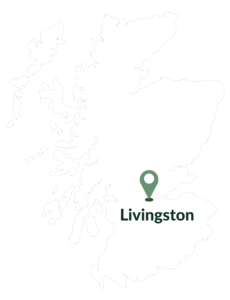
Impact-Bio is based in Livingston, entral Scotland, UK.

Impact-Bio™ is based in central Scotland, UK.

Impact Technology Centre, Livingston, UK, EH54 7BU

Upcoming Events

  • IBioIC Annual Conference – 10-11th March 2026

  • Interplas 2nd- 4th June 2026

FAQs

Biodegradability testing assesses how and how quickly a material breaks down in natural environments, playing a critical role in evaluating its environmental impact and sustainability.

During these tests, the material is placed in a controlled environment with defined microorganisms, temperature, humidity, and oxygen levels. Laboratories then measure indicators like CO₂ or methane evolution, mass loss, or physical disintegration to understand how the material behaves over time.

The results show whether the material meets recognised international standards, helping manufacturers validate environmental claims, support certification, and ensure the product performs as intended in its end-of-life environment.

Biodegradability testing is essential for proving that a material truly breaks down in the environment it’s designed for. Whether that’s industrial composting, home composting, soil, freshwater, or marine conditions. Without proper testing, claims of “biodegradable” or “compostable” can be misleading, risking non-compliance with regulations and eroding customer trust.

Testing provides scientifically validated evidence that your material performs as intended, supports regulatory certification, and helps you credibly differentiate your product in a market that increasingly scrutinises environmental claims. It also reduces the risk of greenwashing and ensures your sustainability messaging stands up to industry, customer, and legal expectations.

The right standard depends on where and how your material is expected to break down. There is no single “universal” biodegradation test. Each standard is designed for a specific end-of-life environment, such as industrial composting, home composting, soil, freshwater, wastewater or marine conditions.

At Impact-Bio™, we help you determine the most relevant and credible standard by understanding your product, its application, and its intended disposal pathway. Once we’ve identified the correct environment, we recommend the appropriate test method and guide you through the full validation process.

If you’re unsure which standard applies, our team will support you from your first enquiry.

The duration of biodegradability testing depends on the test method, material type, and the end-of-life environment being assessed.

Overall, most full-scale compliance tests require multiple months to ensure accurate, scientifically robust results. This allows for reliable validation of environmental claims and end-of-life performance.

Please get in touch to discuss the most appropriate test method for your material or product.

Biodegradability testing can be performed on a wide range of natural, synthetic, and bio-based materials to determine how they break down in different environments. Common materials include:

  • Bioplastics and compostable polymers (PLA, PBAT, PHA, starch blends, cellulose-based materials)

  • Conventional plastics with additive technologies designed to enhance degradation

  • Packaging materials such as films, coatings, trays, labels, adhesives, and laminates

  • Natural fibre composites (hemp, flax, bamboo, wood–polymer blends)

  • Paper, cardboard, and fibre-based products

  • Organic materials like agricultural waste, moulded pulp, and biomass-derived components

  • Consumer product components – cutlery, bags, containers, rigid parts, caps, and more

  • Industrial materials – foams, resins, coatings, sealants

If your material is solid, polymeric, fibre-based, or organic, it can typically be assessed under a suitable biodegradation or disintegration standard.

Biodegradable can describe the process that occurs when natural organic matter breaks down in the environment by bacteria or other living organisms. 

Compostable refers to one of the environments in which biodegradation can occur (compost), in addition to other environments where biodegradation can take place, such as seawater, freshwater, soil, wastewater sludge, and landfill. 

Although both terms are used as labels on packaging in similar ways, the two terms are not interchangeable or comparable by nature. For example, compostable packaging is biodegradable, but not all biodegradable packaging is compostable, as it may have been designed to biodegrade in a different environment than compost i.e., seawater.

Standard Testing

Blog

Go to Top