ASTM G155 : Automotive Accelerated Weathering Standards
ASTM G155 – Xenon Arc Exposure of Non-metallic Materials
Sunlight, temperature, and moisture can quietly (but significantly) damage materials over time. Fading colours, cracking coatings, and weakened plastics can all lead to premature failure and dissatisfied customers.
With ASTM G155 testing, you can see those effects long before your product ever reaches the field. This standard uses xenon arc light to replicate the full spectrum of natural sunlight; helping you understand, predict, and improve your material's long-term durability.
What ASTM G155 Testing Involves
ASTM G155 describes laboratory methods for exposing non-metallic materials; including plastics, paints, coatings, and composites to xenon arc light under controlled conditions of temperature and humidity.
It's designed to simulate real-world outdoor or indoor sunlight exposure, including the effects of UV, visible, and infrared light. The test reproduces both sunlight and weathering cycles using programmable irradiance, temperature, and water spray or humidity.
This test provides a realistic measure of how a product's appearance, mechanical strength, and chemical structure may change after extended exposure to the elements.
Methodology
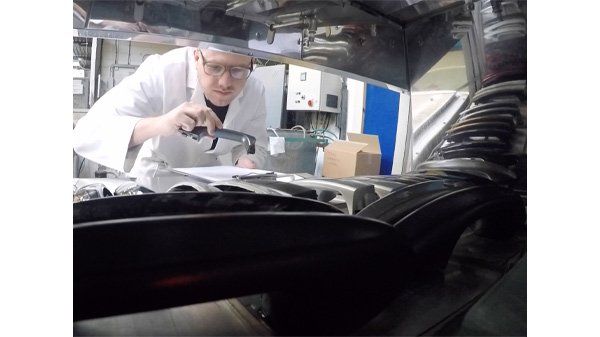
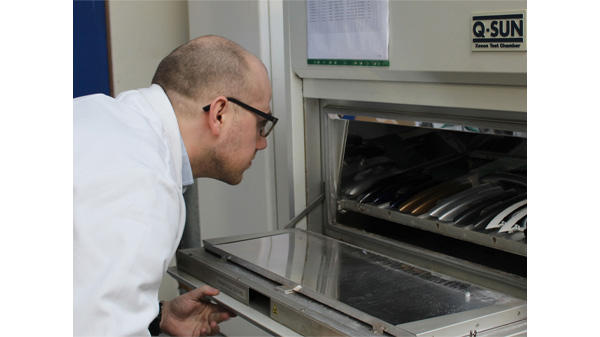
At Impact Solutions, we conduct ASTM G155 testing using xenon arc weathering chambers equipped with advanced light filters and environmental controls.
A typical exposure programme includes:
- Mounting specimens in the chamber.
- Programming light and dark cycles to simulate day–night patterns.
- Controlling temperature, humidity, and water spray for realistic environmental variation.
- Periodic evaluation for changes in colour, gloss, cracking, or mechanical integrity.
Test durations typically last for 3,000+ hours, with twelve cycles of varying conditions as standard.
Relevant Industry Applications
ASTM G155 testing is used across industries that demand long-term material reliability, including:
- Automotive – interior and exterior component durability, colourfastness
- Aerospace – coatings, composites, and polymer performance
- Construction materials – façades, roofing, sealants, and insulation
- Paints and coatings – gloss retention and adhesion
- Consumer products – packaging, outdoor goods, and signage
Benefits of ASTM G155 Testing
- Provides realistic simulation of full-spectrum sunlight (UV, visible, IR)
- Offers accelerated prediction of long-term weathering performance
- Enables data-driven material comparisons and formulation improvements
- Reduces risk of premature ageing, fading, or mechanical failure
- Supports compliance with quality and durability standards globally
FAQ
Q: What's the difference between ASTM G155 and ASTM G154?
ASTM G155 uses xenon arc lamps to simulate natural sunlight across the full spectrum, while ASTM G154 uses fluorescent UV lamps that target only the UV portion. G155 is often preferred for coatings, automotive components, and applications requiring full-spectrum accuracy.
Q: How long does ASTM G155 testing take?
Typically, 3,000+ hours, depending on exposure cycles and the durability being evaluated.
Q: Can G155 simulate indoor lighting conditions?
Yes. With appropriate filters and irradiance control, xenon arc testing can replicate both outdoor sunlight and indoor light exposure environments.
Ready to prove your product's durability under realistic sunlight and weather conditions?
Contact Impact Solutions to discuss ASTM G155 xenon arc testing and how we can help you validate long-term performance and reliability.