Assessing Polymer Ageing FTIR
Impact Solutions provides FTIR analysis to assess polymer ageing, helping manufacturers understand how materials degrade over time under environmental and operational conditions.
This service supports product development, lifetime prediction, and failure investigation across a wide range of plastic applications.
How Does FTIR Assess Polymer Ageing?
FTIR (Fourier Transform Infrared Spectroscopy) is used to detect chemical changes in polymers by analysing how the material absorbs infrared light.
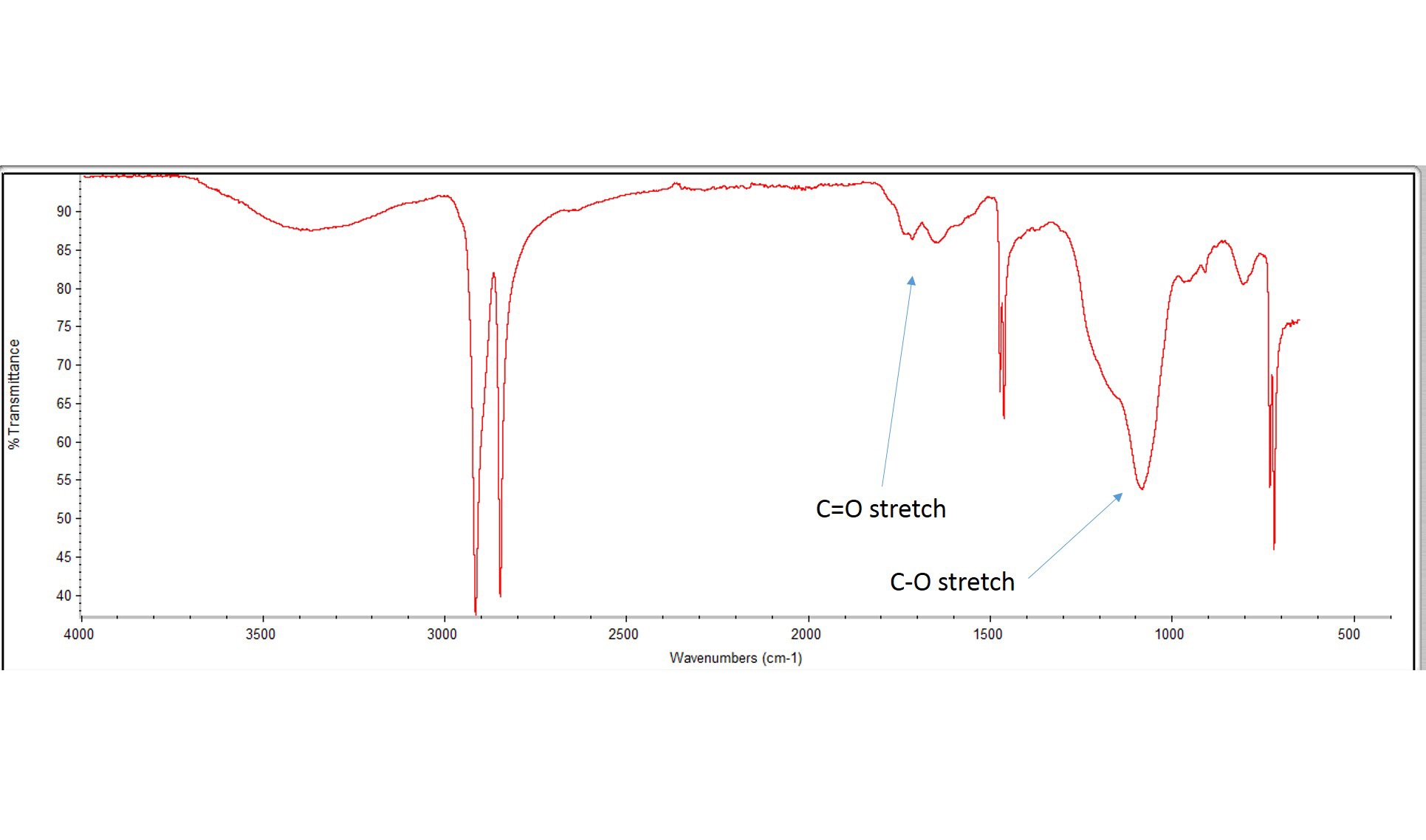
As polymers age, their chemical structure changes, creating new functional groups such as carbonyl and hydroxyl groups. One of the strongest capabilities of the FTIR is the identification of degradation-oxidation within the plastic, and it can, therefore, be used in assessing polymer ageing.
What FTIR Measures in Ageing
- Formation of oxidation products (e.g. carbonyl groups)
- Changes in molecular structure and bonding
- Degradation mechanisms such as chain scission or crosslinking
- Increase in ageing-related indices (e.g. Carbonyl Index)
These measurements provide a clear indication of how far a material has degraded.
Plastics are susceptible to thermal oxidation and degradation, rendering them brittle and affecting their colour. Oxidation could be caused due to poor mixing of additives, bad processing and extensive thermal or sun-UV exposure. This will yield extra bands in the relevant FTIR polymer spectrum.
Why is FTIR Used for Ageing Analysis?
FTIR is widely used because it provides rapid, reliable insight into chemical degradation without extensive sample preparation.
Key Benefits
- Detect early-stage degradation before mechanical failure
- Monitor oxidation and chemical changes over time
- Compare aged vs. unaged materials
- Support lifetime prediction and durability assessment
- Enable root cause failure analysis
FTIR is particularly valuable because it tracks the chemical changes that directly control material performance loss.
Applications of FTIR Ageing Analysis
FTIR ageing analysis is widely used across industries where long-term material performance is critical:
- Plastic pipelines and infrastructure
- Packaging materials
- Automotive components
- Electrical and cable insulation
- Consumer and industrial products
It is particularly useful for evaluating how materials perform under real-world environmental exposure.
FAQs on Polymer Aging
What causes polymer ageing?
Polymer ageing is caused by environmental factors such as heat, UV exposure, oxygen, and moisture, which lead to chemical degradation.
How does FTIR detect polymer degradation?
FTIR detects changes in chemical structure by identifying new functional groups formed during ageing, such as carbonyl groups.
What is the carbonyl index in FTIR?
It is a measure used to quantify oxidation in polymers by analysing specific absorption peaks in the FTIR spectrum.