Horizontal Burning Test for Foamed Materials
Flexible and cellular plastic materials are widely used in products where lightweight construction, insulation and cushioning are essential. However, these materials can behave very differently in a fire compared to solid plastics, making dedicated flammability testing essential.
Manufacturers of foam products must demonstrate that their materials meet recognised fire performance requirements to support product safety, customer specifications and regulatory compliance. Without appropriate testing, businesses risk product failure, delayed approvals, costly redesigns and increased fire safety concerns.
The Horizontal Burning Test for Foamed Materials provides a recognised method for assessing the flammability of cellular plastics and determining whether materials achieve the UL94 HBF, HF-1 or HF-2 classifications.
What the Horizontal Burning Test for Foamed Materials Involves
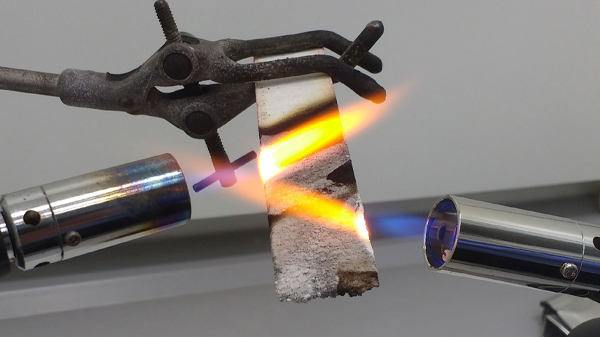
The Horizontal Burning Test evaluates the burning behaviour of cellular and foamed plastic materials when exposed to a controlled flame while mounted horizontally.
Testing is performed in accordance with:
- ISO 9772
- ASTM D4986
The test is commonly used to determine whether materials meet the requirements for the following UL94 classifications:
- UL94 HBF – Horizontal Burning Foam classification based on the material’s burning rate or self-extinguishing behaviour.
- UL94 HF-1 – The highest classification for flexible foamed materials, requiring short afterflame times, no flaming drips that ignite cotton and controlled afterglow behaviour.
- UL94 HF-2 – Similar to HF-1 but allows flaming drips that may ignite the cotton indicator and has less stringent afterflame requirements.
During testing, the material is assessed for:
- Burning rate
- Afterflame time
- Afterglow time
- Flaming drips
- Ignition of the cotton indicator
- Overall burning behaviour
The results provide valuable information for material selection, product development and compliance with customer specifications.
Methodology
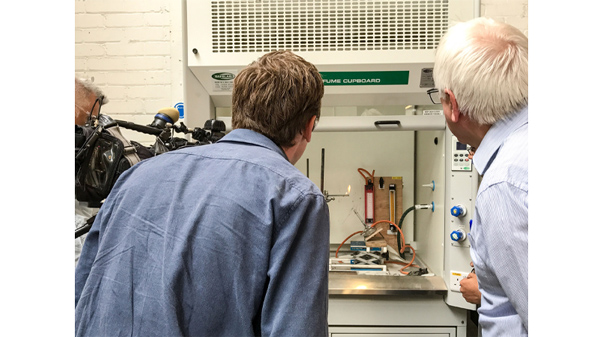
At Impact Solutions, Horizontal Burning Tests for foamed materials are carried out using calibrated flammability testing equipment in accordance with recognised international standards.
A typical testing programme includes:
- Preparation of foam specimens to the required dimensions.
- Conditioning of samples under controlled temperature and humidity.
- Horizontal mounting of the specimen within the test apparatus.
- Application of the specified flame for the required duration.
- Measurement of burning time and flame travel.
- Observation of afterflame, afterglow and dripping behaviour.
- Assessment against the requirements for UL94 HBF, HF-1 or HF-2 classifications.
- Comprehensive reporting with test observations and classification results.
Testing is performed under controlled laboratory conditions to ensure accurate, repeatable and reliable results.
Relevant Industry Applications
Horizontal Burning Testing for Foamed Materials is widely used for:
- Flexible polyurethane foams
- Furniture and seating components
- Automotive seating and interior trim
- Electrical insulation materials
- Packaging foams
- Thermal insulation products
- Consumer products
- Polymer and foam development
Benefits of Horizontal Burning Testing for Foamed Materials
- Determines compliance with UL94 HBF, HF-1 and HF-2 classifications
- Evaluates the fire performance of cellular plastics and foams
- Supports product certification and regulatory compliance
- Assists with material selection and formulation development
- Enables comparison between different foam materials
- Supports quality assurance and product qualification
- Reduces the risk of fire-related product failures
Need to evaluate the fire performance of your foamed plastic materials?
Contact Impact Solutions to discuss Horizontal Burning Testing to ISO 9772 and ASTM D4986, and determine whether your materials achieve the required UL94 HBF, HF-1 or HF-2 classification.
FAQ
Q: What is the difference between UL94 HBF, HF-1 and HF-2?
HBF is a horizontal burning classification based primarily on burning rate or self-extinguishing behaviour. HF-1 and HF-2 are more demanding classifications for flexible foams that also assess afterflame time, afterglow time and whether flaming drips ignite a cotton indicator.
Q: Why are foamed materials tested differently from solid plastics?
Foamed materials have different density, cellular structure and burning characteristics, so they require dedicated test methods that better represent their behaviour during fire exposure.
Q: What industries commonly require this testing?
The test is widely used for furniture, automotive interiors, electrical insulation, packaging, consumer products and other applications where flexible or cellular plastics are used.